“Humans are, and will always be, a fundamental resource of a successful company.”
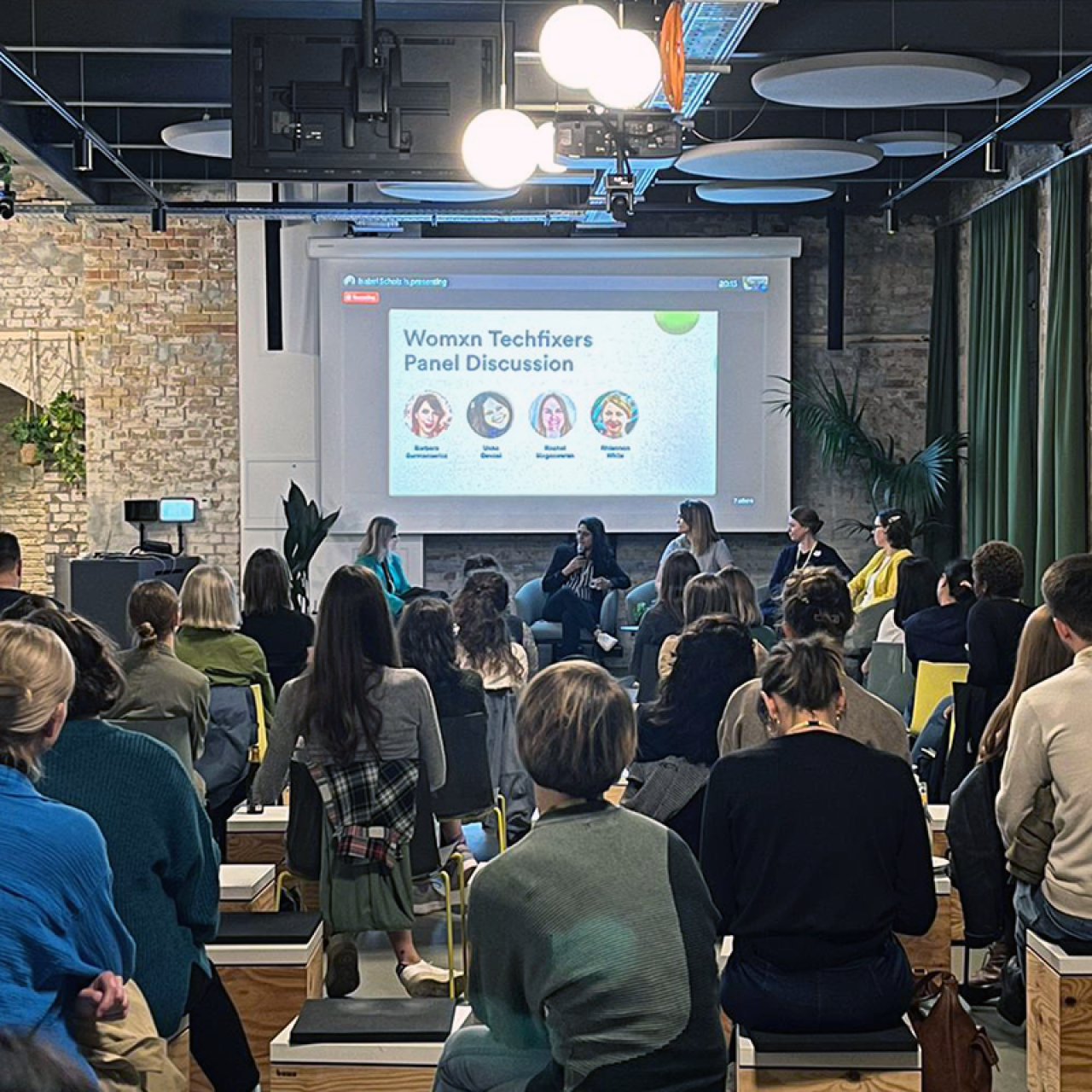
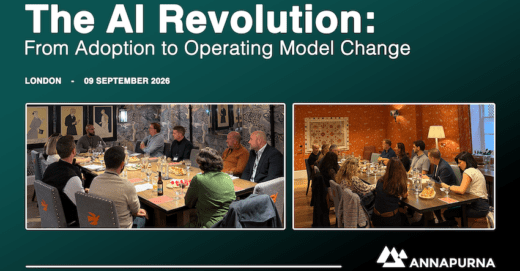
After hosting an event in Munich on the same topic the week before, we were delighted to partner again with Eightfold, the market-leading talent intelligence platform, for an insightful conversation with 30+ HR executives on the topic of agentic AI.
Agentic AI’s time to reshape the future of HR is now. Moving organisations and the HR function itself beyond automation into an era where intelligent systems can take action, learn, and adapt within core people processes. For HR leaders, this shift represents both a profound opportunity and a strategic responsibility. As AI begins to enhance talent matching, personalise employee experiences, and streamline decision-making, the role of HR becomes more human (not less) centred on judgement, trust, ethics, and organisational stewardship.
The conversation touched on a variety of topics, bringing about the following takeaways:
Agentic AI will transform HR operations — but trust, fairness and responsible design will determine whether it succeeds.
The role of agentic AI in the HR function remains undefined. There is the ability to autonomously streamline processes such as talent matching, early-stage interviews, onboarding flow, and employee support. This aligns with broader industry research predicting that over half of HR processes will be AI-augmented within the next 3–5 years, especially in high-volume or rules-based work. However, the discussion reinforced a crucial point: power doesn’t equal permission.
For AI to genuinely ‘boost’ HR, organisations must invest in:
- Fairness and bias monitoring
- Human oversight by exception (focusing on instances with people where judgement truly matters)
- Clear governance on what AI should vs. should not decide (particularly in hiring and performance)
- Transparency in how decisions are made (critical for maintaining employee trust)
Leaders compared this moment to a ‘second industrial revolution’, but with a key difference: this time trust is the essential infrastructure. Without robust governance and clarity, the promise of autonomous AI risks becoming a credibility challenge for HR rather than an accelerant.
HR must evolve its skills, mindset and operating model
To thrive as a field, HR must become consultative, data-fluent, yet stay deeply human. A consistent theme across the conversation was that AI won’t replace the HR function — but it will fundamentally reshape its value proposition. This mirrors findings from McKinsey, whereby the fastest-growing HR capabilities are now data interpretation, ethical reasoning, change leadership, and strategic consulting.
If entry-level roles become automated, organisations must design new learning pathways so future leaders still gain breadth, judgment, and organisational literacy. Our future leaders need to have not just the skills but the experience of using those skills. HR teams need the ability to interpret outputs, challenge recommendations, and translate data into action. These ‘AI sense-making skills’ are vital to reap the benefits of any technology innovation; the individual using it needs to understand the capabilities and how to interact with it.
Technology is undoubtedly an enabler, not the solution itself. The human layer remains the differentiator, especially across talent and culture. AI has the ability to make us more human, but this can only become true when HR intentionally doubles down on empathy, coaching, trust-building, and narrative skills. This mindset shift is already being echoed externally: Gartner notes that 70% of CHROs expect HR roles to become more strategic and consultative as automation scales, which was echoed in the room.
AI and humans working in harmony will unlock talent visibility, personalised experiences, and a redesigned employee lifecycle.
Across both of the roundtables, there was a strong belief that AI’s biggest value for HR may be in talent intelligence and employee experience, not just in efficiency.
Global HR tech trends where agentic AI is being used cover a variety of examples, such as mapping skills across organisations, creating personalised career paths and learning journeys, identifying hidden talent and internal mobility opportunities, strengthening employee self-service with smart agents and providing real-time insights to leaders and managers.
Around the table, the group emphasised a critical component around the fact that ‘a strategy isn’t a strategy until you add the people piece’. Organisations seeing the biggest ROI from AI are those that blend automation with human capability, rather than simply digitising existing processes.
The maturity of AI is changing so quickly that what we are experiencing currently vs. what we will experience in 2 years will be so very different. If we can, as HR, define how AI transforms expectations of talent acquisition, how humans can add unique value across the journey and how to maintain ‘tribal knowledge’ across our organisations as digital twins become more common, we can be the ones who lead the change.
The future of HR belongs to those who can harness agentic AI while ensuring people remain at the heart of every transformation.