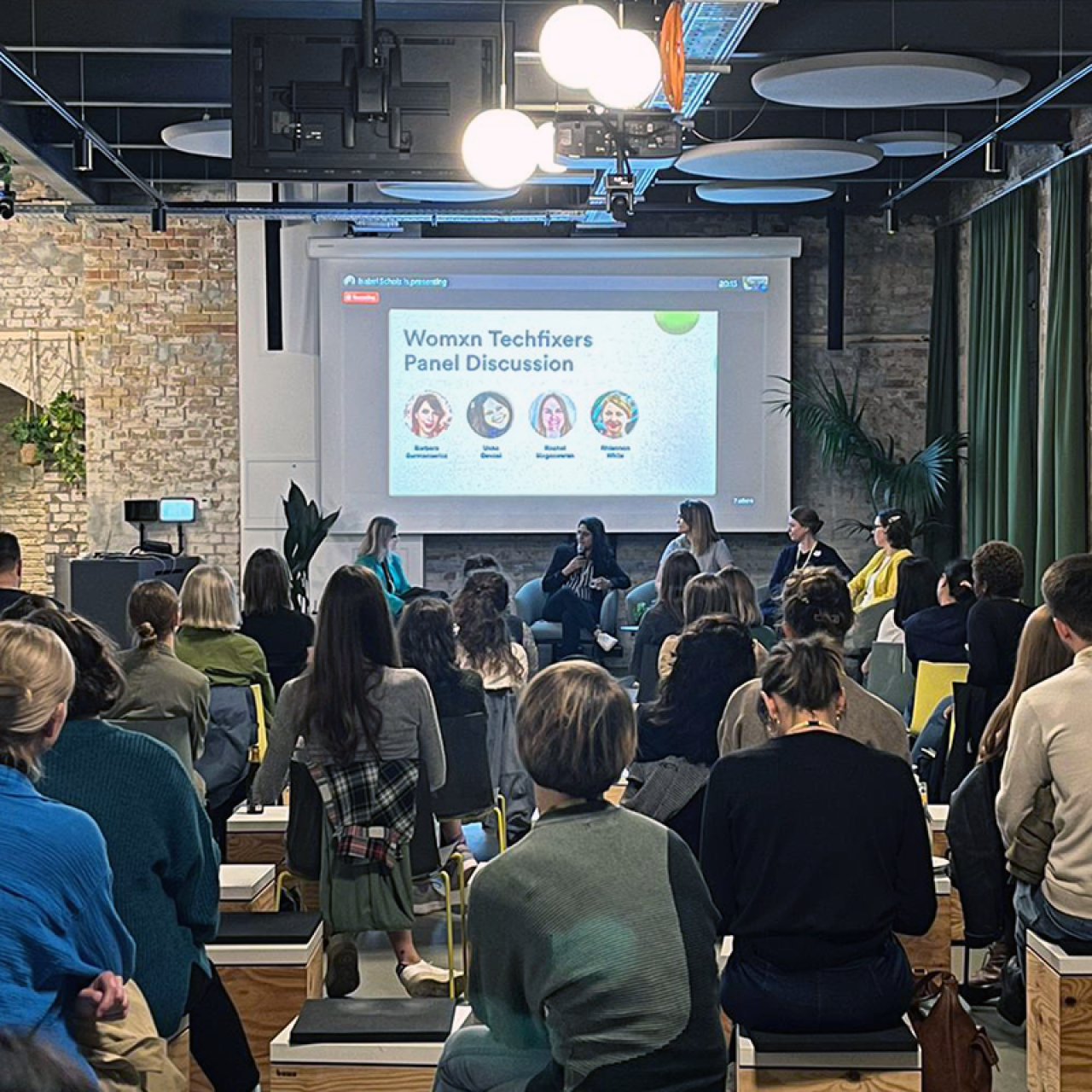
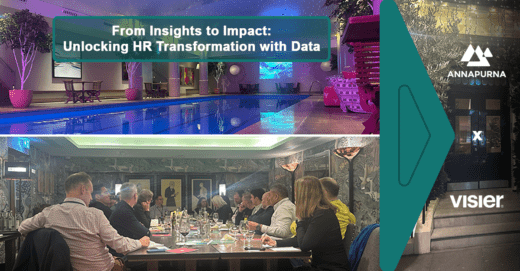
Recently in Berlin, in partnership with Remote, we brought together 18 senior People leaders for a Chatham-House discussion exploring how organisations can build people infrastructure that delivers greater transparency, operational visibility, and employee trust at scale.
As businesses continue to grow across borders, the complexity surrounding payroll, compliance, workforce planning, and employee experience gets harder.
Organisations are no longer looking for what HR tool can solve their current problem(s). Instead, they’re rethinking how they operate and looking to use fewer tools that do more. This way, they can connect transparency, governance, scalability, and employee experience without overcomplicating things with unnecessary steps/ integrated tools.
Below are the three key themes that sprang up most during the conversation.
Too Many Tools, Not Enough Transparency
The theme that came up most throughout the evening was the operational complexity when scaling globally with a ‘buy the best-in-class’ solution to each problem mindset.
It’s a familiar story. Organisations will solve their payroll, HRIS, compliance, workforce planning, learning systems, and employee data problems with specific “best-in-class” tools. But our attendees questioned whether this mindset and disconnect between tools is actually causing more problems than value.
When your employee, payroll, compliance, and performance data all sit across multiple systems, providers, and regions, it becomes extremely hard to create transparency across the global workforce.
Many leaders highlighted that with the advancements of AI, they can see why many would immediately react to this problem by creating their own tools to replace ATS and data migration, but the room didn’t agree that this was a complete solution. By creating your own tools, you gain more control, but you also become completely dependent on one provider to keep the rest standing, which puts you in a vulnerable position.
So, what is the answer?
Our leaders agreed that finding unified systems that can control and own multiple data requirements, but that also can connect to the other self-built tools easily if needed. This way, you have fewer tools at once, but are still spread wide enough to not be severely hit by outages in one platform.
Employee Experience is Becoming the Real Measure of HR Transformation
In an AI-dominated working world, it’s no surprise that many organisations are heavily focused on systems, automations, and infrastructure. However, our attendees made it very clear that, irrespective of this narrative, employee experience still has to take priority.
Technology only matters if it improves employee experience. We still need to engage with people as people, not just data sets.
There was a broad agreement that many HR transformations historically focused on functionality and process efficiency, rather than how employees actually experience work. Our leaders around the table discussed how employees are now increasingly expectant of:
- Better transparency around pay and progression.
- Faster access to their work information.
- More self-service capabilities.
- Clearer communication and consistency across the organisation.
Within this topic it was only a matter of time before the EU Pay Transparency Act was mentioned, but our attendees acknowledged that, given the lack of guidance on expectations for implementation of the act, it’s not top of mind as of the moment.
The conversation did steer slightly from here, though, onto job titles and how, with organisations all having their own internal structuring and ranking order is creating a need to evolve to equating pay to skills rather than titles. Given the inconsistency of job titles amongst organisations, salary benchmarking and talent evaluation is becoming harder, hence the need to move to a skills-based approach.
AI is Accelerating Faster Than Organisational Readiness
The ‘hype’ of AI is slowing down, and we’re now entering a stage where the true value-gain of the technology and its role within organisations is being put in the light.
While aware of the opportunity AI presents, our attendees focused on the operational, governance, and workforce implications surrounding the rapid adoption of the technology.
A major concern shared by the whole table was the number of organisations that are implementing AI without a clearly defined strategy or operational purpose.
CEOs are buying AI for AI’s sake, without taking the time to understand if it’s actually needed.
When it comes to global organisations that are managing large volumes of employee and payroll data across many regions, there was also a concern from our leaders that the introduction of AI could actually lead to this sensitive data being exposed.
Our attendees noted that if the AI has been tested and governed correctly by the organisation, then you can feel safe entering sensitive information into it. However, in the cases our leaders cited as being a regularity, where organisations are fast-tracking AI and implementing it wherever they can, the ability to trust the technology dwindles and heightens this fear of losing sensitive data.
To combat this, the room emphasised the need to involve work councils from the beginning of the implementation of any new technology tool, including AI. This way it can be governed effectively.
Conclusion
The leaders in attendance reinforced that transparency is no longer simply a ‘cultural aspiration’ or ‘compliance conversation’. It’s now rapidly becoming a core operational capability.
As businesses continue to scale internationally, People leaders are being challenged to create infrastructure that balances transparency with governance, flexibility with control, and automation with human experience.
What really stood out, though, was the desire to move away from single-solution tools and towards building a connected, scalable people ecosystem that can be the catalyst for operational transparency.
Above all, the leaders in the room fundamentally agreed that the organisations that will succeed are the ones that use technology to support people, not replace them.